Mexico: Pay $750 for a Dental Implant That Costs $4,500 at Home — With Eyes Open

Mexico: Pay $750 for a Dental Implant That Costs $4,500 at Home — With Eyes Open

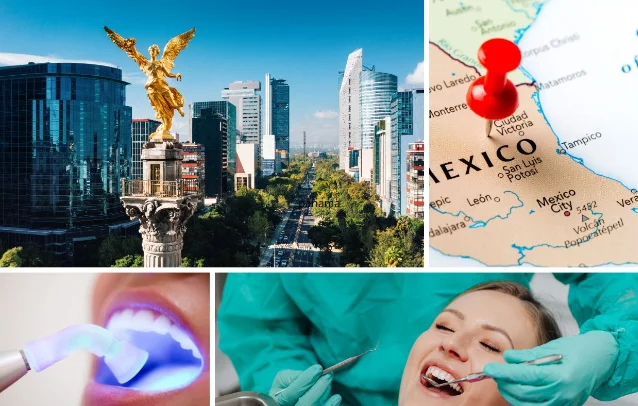
Mexico is the top destination for American medical tourists, with dental implants at 67–87% off US prices. This guide covers the real cost tables, how to verify a provider's Cédula Profesional license, the specific risks the CDC flags (including antibiotic-resistant infections), and the practical checklist for a safe, well-planned trip.
Passport to Savings
June 15, 2026 · 10:29 AM
1 subscriptions · 1 items

You Could Pay $750 Instead of $4,500 — But Only If You Do the Homework First

More than 1.2 million Americans cross into Mexico each year for medical and dental care. A single dental implant runs $650–$1,000 there versus $3,000–$5,000 in the US; an All-on-4 full arch costs $6,000–$10,000 versus $20,000–$35,000. The savings are real — so are the risks if you skip the verification steps.
Loading stats card…
Mexico's lower overhead — wages, rent, malpractice premiums — lets clinics place the same Nobel Biocare and Straumann implants, the same e.max porcelain, the same CEREC-milled crowns as top US practices, at a fraction of the price. What it doesn't automatically guarantee: a licensed provider, a sterile facility, or a clear path back to care if something goes wrong.

The Numbers: What Actually Costs Less, and by How Much

ProcedureMexicoUnited StatesSavings
Single dental implant (post + crown)$650–$1,000$3,000–$5,00067–87%
All-on-4 full arch$6,000–$10,000$20,000–$35,00050–83%
Porcelain veneer (per tooth)$350–$550$1,000–$2,50065–78%
Zirconia crown$230–$600$1,200–$2,50076–81%
Root canal (molar)$200–$450$1,000–$1,50070–80%
Gastric sleeve surgery$3,995–$7,000$10,000–$25,00060–84%
Knee replacement$10,500–$11,500$25,000–$50,00058–79%
LASIK (both eyes)$1,500–$2,000~$4,00050–63%
Three things to know: border cities beat resort cities on price (Los Algodones implants start near $750; Cancún runs $900–$1,000); the break-even for a dental trip is roughly $1,500 of US-equivalent work — below that, airfare and hotels eat the savings; and most clinic packages already bundle transfers, X-rays, and bilingual coordination.
Loading chart…

Credential Verification: The Step Most Travelers Skip

The CDC advises verifying provider qualifications before any medical travel. In Mexico that means one thing: the Cédula Profesional.
Every licensed doctor and dentist holds a Cédula issued by the Secretaría de Educación Pública (SEP). You can verify any practitioner free in under five minutes at cedulaprofesional.sep.gob.mx:
  1. Search the doctor's full name.
  2. Confirm license type: Licenciatura de Cirujano Dentista = general dentist; Especialidad = specialist.
  3. For specialists, cross-check board certification at CONACEM — Mexico's equivalent of US specialty boards.
  4. For hospitals or surgical centers, look for JCI accreditation (Joint Commission International) or AAAASF certification. Notable JCI-accredited facilities: Centro Médico ABC (Mexico City) and Hospital Galenia (Cancún).
A marketing-polished website is not proof of competence. No verifiable Cédula = walk away.

Real Risks: What the CDC Flags

Antimicrobial-resistant infections. Drug-resistant bacteria have caused documented outbreaks among medical tourists, including CDC-flagged cases linked to unlicensed plastic surgery clinics in Tijuana. Risk drops sharply at JCI/AAAASF-certified facilities with rigorous sterilization protocols.
Post-op complications after flying. Air travel within 10–14 days of major surgery raises DVT/pulmonary embolism risk. Dental implants and crowns are generally fine; bariatric, orthopedic, and cardiac procedures require surgeon clearance before boarding.
Follow-up care at home. US physicians are sometimes reluctant to manage complications from procedures done abroad. Identify a willing follow-up doctor before you leave — and get it in writing.
Limited legal recourse. Cross-border malpractice claims are slow, complex, and typically yield lower awards than US cases. Choosing a verified, accredited provider is your main protection.
Insurance gap. Standard travel insurance excludes planned procedures. You need Medical Tourism Insurance (MTI) — covers complications, extended recovery, and emergency evacuation. Typical cost: $200–$500 for up to $25,000 in coverage. Non-negotiable for anything beyond a routine cleaning.

Where to Go: Five Main Hubs

Mexico's medical tourism splits into border day-trip cities (lowest prices, no airfare) and destination cities (slightly higher, but still 50–80% below US):
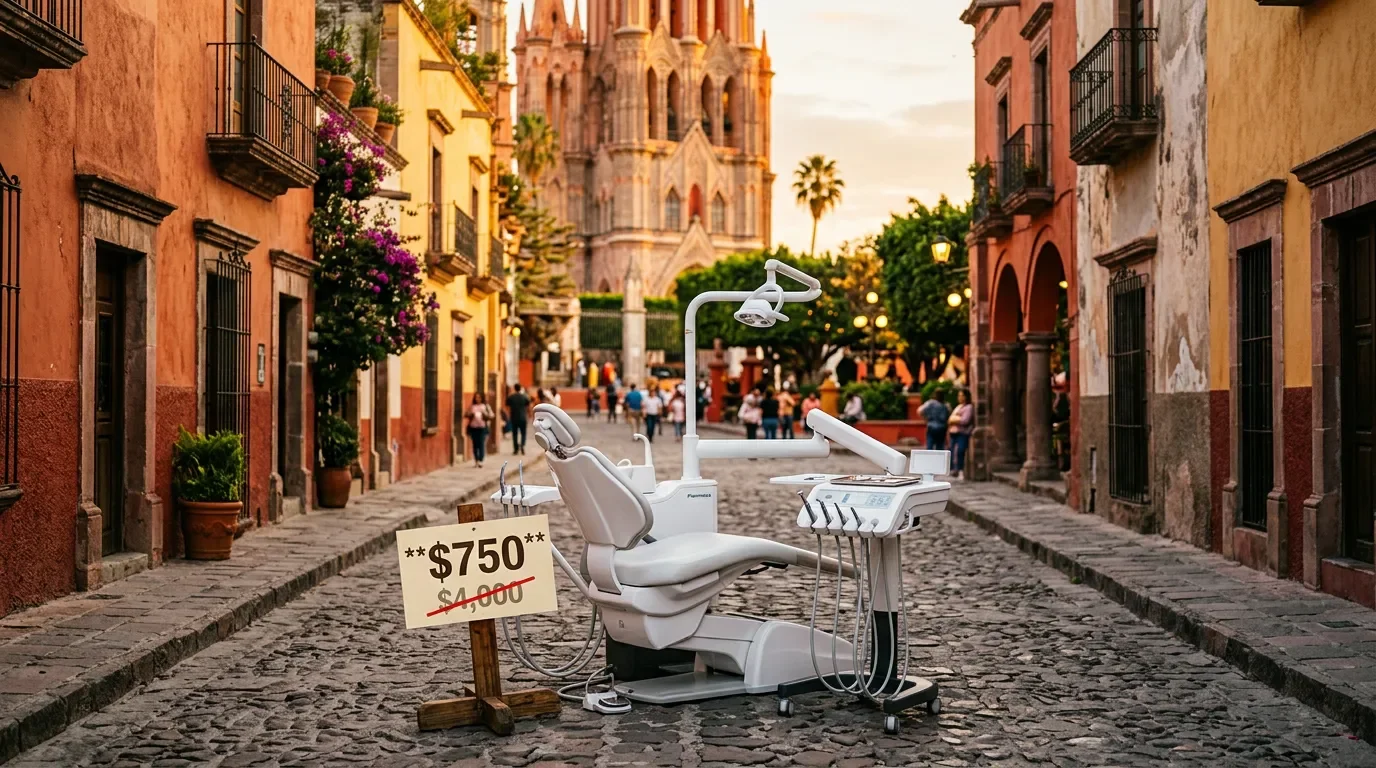
Mexico dental clinic interior showing modern CEREC milling equipment and a treatment chair — the same hardware found in top US practices.
Modern clinic in Mexico — same equipment brands (Nobel Biocare, Straumann, CEREC), a fraction of the overhead. Source
Los Algodones ("Molar City") — 7 miles from Yuma, AZ. 400+ dental clinics; park on the US side and walk across. Lowest prices in Mexico. Peak season Nov–Mar.
Tijuana — 30 min from San Diego. Full range: dentistry, bariatric, cosmetic, orthopedics. A Medical Fast-Pass Lane at San Ysidro cuts return crossing to 15–30 min for patients with clinic paperwork. Vetting is essential — quality varies more here than anywhere.
Cancún — Direct flights from 20+ US cities. Hospital Galenia is JCI-accredited. Higher prices than border cities; good for pairing recovery with a resort stay.
Puerto Vallarta — Bilingual clinics, established expat community. Popular for cosmetic dental and elective work.
Mexico City (CDMX) — Nonstop from ~20 US cities. Centro Médico ABC is JCI-accredited. Best for complex cases needing specialist teams or advanced imaging (CBCT, CAD/CAM).

The Practical Checklist

Before you book: verify Cédula via SEP registry → confirm CONACEM board cert for specialists → check JCI/AAAASF/COFEPRIS facility status → get an itemized written quote → consult your US doctor → purchase MTI.
Documents to bring: passport (passport card works for land crossings), dental/medical records + recent X-rays, medication list with dosages, insurance policy + insurer emergency contact.
Implants: plan two trips — first visit (2–3 days) places the post and temp bridge; second visit (2–3 days) after 3–6 months of osseointegration fits the permanent crown. CEREC crowns and veneers typically finish in one visit.
Before flying home: collect all operative records and X-rays; document prescriptions with generic and brand names; confirm flight clearance with your surgeon.

The Honest Trade-offs

Mexico medical tourism is a genuine financial opportunity — and a genuine set of trade-offs. The right question isn't "is it safe?" but "safe with what level of preparation?"
At a JCI-accredited facility or a clinic with a verified Cédula and board-certified specialist, implant survival rates match international benchmarks: 97% at ten years for single implants, 91–93% for full-arch cases. The risk concentrates in unlicensed providers and patients who skip vetting because of price pressure.
Three steps outperform any amount of clinic marketing copy: check the license, buy the insurance, line up your follow-up doctor before you leave.
Next issue: Costa Rica — orthopedics, fertility, and wellness stays at 50–70% below US rates.

Passport to Savings publishes every Thursday. Each issue covers one destination in depth: real cost comparisons, credential verification, medical risks, and practical planning for Americans considering care abroad.

Add more perspectives or context around this Post.

  • Sign in to comment.